
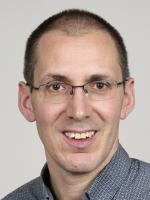
1968 Professor of Chemistry

I joined the Department in 2020 as the 1968 Professor of Chemistry. See the following link for more information.

Our research involves computer simulations of catalytic and environmental interfaces, aiming at reaching fundamental new understanding of elementary processes at such interfaces. As part of our work, we also seek to develop and improve current simulations methods (quantum and classical) to study such systems. For further information on our research interests see our group web pages.

Positions are availabe for talented students (Part III, masters and PhD) and post-docs interested in joining the group. Interested candidates are encouraged to get in touch -- further information on how to do this can be found here. 

Biography

Angelos Michaelides obtained a PhD in Theoretical Chemistry in 2000 from The Queen's University of Belfast. Following this, he worked as a post-doctoral research associate and junior research fellow at the University of Cambridge and then at the Fritz Haber Institute, Berlin as an Alexander von Humboldt research fellow and subsequently research group leader. Between 2006 and 2020 he was at University College London where he was Director and Co-Director of the Thomas Young Centre: The London Centre for the Theory and Simulation of Materials and the founding Director of the Materials and Molecular Modelling Hub. Since 2020 he has been the 1968 Professor of Chemistry at the University of Cambridge.

Professor Michaelides discusses his research

Publications

Strong Coupling between Nanofluidic Transport and Interfacial Chemistry: How Defect Reactivity Controls Liquid-Solid Friction through Hydrogen Bonding
L Joly, G Tocci, S Merabia, A Michaelides
J Phys Chem Lett
(2016)
7
Materials modelling in London
D Ciudad
Nature materials
(2016)
15
Can Ice-Like Structures Form on Non-Ice-Like Substrates? The Example of the K-feldspar Microcline
P Pedevilla, SJ Cox, B Slater, A Michaelides
The Journal of Physical Chemistry C
(2016)
120
The interplay of covalency, hydrogen bonding, and dispersion leads to a long range chiral network: The example of 2-butanol
ML Liriano, J Carrasco, EA Lewis, CJ Murphy, TJ Lawton, MD Marcinkowski, AJ Therrien, A Michaelides, ECH Sykes
J Chem Phys
(2016)
144
Controlling Hydrogen Activation, Spillover, and Desorption with Pd-Au Single-Atom Alloys.
FR Lucci, MT Darby, MFG Mattera, CJ Ivimey, AJ Therrien, A Michaelides, M Stamatakis, ECH Sykes
The journal of physical chemistry letters
(2016)
7
Atomic-Scale Picture of the Composition, Decay, and Oxidation of Two-Dimensional Radioactive Films
A Pronschinske, P Pedevilla, B Coughlin, CJ Murphy, FR Lucci, MA Payne, AJ Gellman, A Michaelides, ECH Sykes
ACS Nano
(2016)
10
Two Dimensional Ice from First Principles: Structures and Phase Transitions.
J Chen, G Schusteritsch, CJ Pickard, CG Salzmann, A Michaelides
Phys Rev Lett
(2016)
116
Fast diffusion of water nanodroplets on graphene
M Ma, G Tocci, A Michaelides, G Aeppli
Nat Mater
(2015)
15
The Many Faces of Heterogeneous Ice Nucleation: Interplay Between Surface Morphology and Hydrophobicity.
M Fitzner, GC Sosso, SJ Cox, A Michaelides
J Am Chem Soc
(2015)
137
Stability of Complex Biomolecular Structures: van der Waals, Hydrogen Bond Cooperativity, and Nuclear Quantum Effects.
M Rossi, W Fang, A Michaelides
The Journal of Physical Chemistry Letters
(2015)
6

Head of group

Research Interest Group

Telephone number

01223 336314

Email address